Thursday, 18 April 2013

Evaluation: Question 6: What have you learnt about technologies from the process of construction this product?


I came in with some minimal knowledge on Adobe After Effects, like making shapes and minor animating, as seen in my re-do of Saul Bass' famous intros. Since then, I've gain skills from watching hours of online tutorials and practise. In my ident, and even my first Evaluation Question, I used particles and still 3D images, as well as an inbuilt camera tool to create 3D compositions, that I'm able to "travel" through. The end result is the illusion that you're moving through a space-like zone.

Looking at the top image, which is my
current ident, in comparison to the lower
image, which is one of my first works in
After Effects, you can clearly see how much
I have progressed.
Not only that, I've used pre-keyed footage to create gunshots, like the one in the dream sequence of "SHOT".

A muzzle flash, to make the gun look
like it's firing.
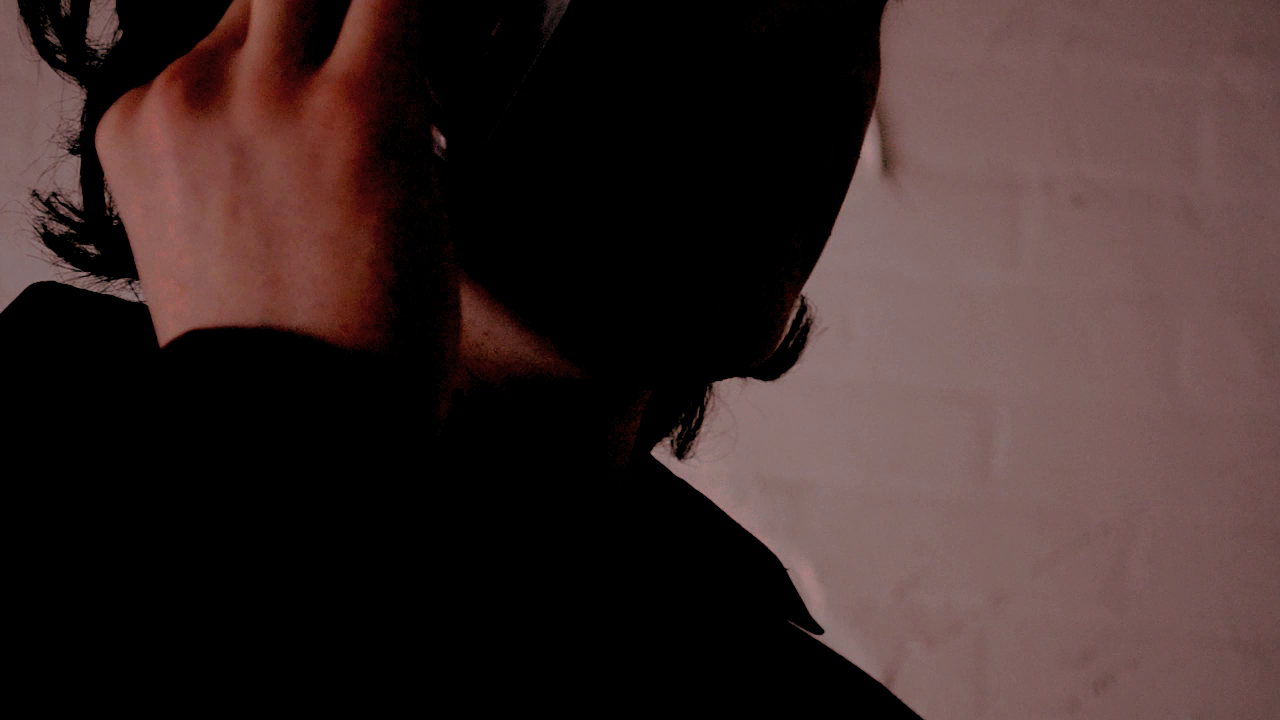
Colour correction has been used to
create a surreal effect.
I colourized this scene to make it red
communicate to the audience that
Eilif is evil.

Colour-correction is something I learnt to used in After Effect (and Premiere Pro too). Extreme examples of this are in the dream sequence and scenes with Eilif.


I didn't realize how demanding programs like Adobe After Effects and Premiere Pro can be on a computer. Frequently I've face crashes and loss of work because of this. When I was editing on my own computer, I found that I had to upgrade the hardware for it to be able to cope with the strenuous task of editing. It's that and I scaled down the quality of some video files so they could be managed by my under adiquate computer.


The skull seen in this image and
the one above is representitive of
Eilif.
Adobe Photoshop is another program that I used within the Adobe Creative Suite. I had never used photo shop before but learn how to use layers and filters to create images that I had in the background in "SHOT" as mise-en-scene.


I've learnt about the mass video hosting website which is the famous "YouTube". Obviously, YouTube was nothing too new for me as a viewer, but as an uploader I was new to it. I've learnt that YouTube is a great platform for hosting videos.

Blogger, this website, is a great place for uploading my content to share with the world, as well as a great way to present my work. Though Blogger is a great way to place content, however the video uploader wasn't as good as YouTube's, which is why I opted for that. Plus, as they're both owned by google, they're integrated which makes it a lot easier.

Focus/defocus in the dream sequence.
 
Though I've used cameras in the past, I had never used a DSLR. The Nikon D3100 I found to be great. I learnt how to manual focus it to get focus/defocus shots in "SHOT".

Wednesday, 17 April 2013

Evaluation: Question 5: How did you attract/address your audience?

For any film to be successful, it must have an audience, for it to have an audience, it was interest them and hence attract and address them. The audience research I did (audience interview, typical character interview ect.) gave me a chance to address multiple people and created a sense of the audience I can attract.


I believe that the title of my film, "SHOT", is one of many things that could interest and attract an audience. The name "SHOT" suggests guns, which suggest violence. Because violence is a thing that is scarce in most people's everyday life, a large number of people find it entertaining. And if that's not exciting enough for them, it's all in capital letters. Check that out. It practically screams "HEY YOU! WATCH THIS BECAUSE, IF NOTHING ELSE, SOMEONE IS DEFIANTLY GOING TO GET SHOT!" Crazy, right? No? Okay...
In thrillers, there's typically guns and violence. I feel that i the openinI've clearly addressed this cliche.
In psychological thrillers, the audience must be activly proicessing what's going on, by asking questions. I feel that from the openin, Ive created this enigma. There are alto of questions which attract the audience. For example, why are the colours purple? Why are they in a field? Who are these characters? Why ius this happening?
 
 
Behind the scenes of Tarantino's "Django Unchained".
As you can see, there's a lot of guns, blood and dead bodies.
Also, it's a great film. Just sayin'.
When the people who are interested do further research into the film , they'll find that it's a psychological thriller. This is generally a genre that people like, gets 'em thinking. This genre alone can attract a lot of people, purely from the mystery behind it. Of course, because it's an original story from an unknown director, there's 50% chance that people will either walk away, because they won't see any point in seeing it, or they''ll do the right think and give it a chance. Also i'm totally unbiased in what I think they should do. Trust me, I'm also a psychology student.  The reason they'd see it from an unknown director is because they would like to see something they haven't seen before. For example, if you go to a Tarantino flick, you know you're going to see spectacular violence with lots blood. While, awesome, yes, it's cliche. Some people wish to look for new experiences, which is something that my film can hopefully deliver.

There are numerous way that I have addressed the audience through use of characters and setting. The location of the film supposed to be an urban environment in a time similar to ours. This therefore appeals to people who feel they can relate.  Another way people can relate is through characters, especially if they're having a recurring nightmare about shooting their best friend in a field. But seriously, these characters, especially Riley and Nicholas have exaggerated personality traits that people should be able to relate to. People love characters they can relate to, it creates a sense of familiarization. This makes it feel as though they've been addressed and even makes them feel special. Awww.
Even the character of Eilif can be used for people to relate to their "evil" bosses and the people who they feel are raining down on them.


Saturday, 13 April 2013

Evaluation: Question 4: Who would be the audience for your media product?

I feel that the age range of my movie would be from around 15-40. However, it would only aim at certain individuals in that age range.
15-16 year olds in the range would see this film because of the mild violence and slight action scenes within the movie. These type of teenagers would likely be smart, "techy" and ranging from slightly geeky to full on "I've seen every episode of Star Trek twice." Mind you, that can be applied to most people aged 15-40 in this group.
17-30 Year-olds who see this would definitely be the type of people who see films frequently and have lots of film posters on their bedroom walls or a massive collection of films (like the character, Harry, I created to interview). A few of them are probably amateur film makers themselves. Some would own blogs where they post film reviews. A large portion of these people consider themselves to be "hipster" or "alternative" and claiming that they liked this movie before it was cool, or they're seeing it because it too is not-mainstream.
31-40's probably have a huge collection of retro games, as well as some newly released titles. Their movie collection seems never ending. They have some of the original prints of various Marvel and DC comic books. They go to the movies, not just once, but will see it multiple times to critique it and post it to their blog which is popular with other people like them. They will argue for hours with each other in the comment section about meaning of imagery in the film which may or may not be their.

I think that this film would draw in people who enjoy sci-fi, action, thriller and drama, as well as psychological thriller.
The  people who see this are likely to be in the western hemisphere, places like Europe or America, mainly.

Evaluation: Question 3: What kind of media institution might distribute your media product and why?


Evaluation: Question 2: How does your media product represent particular social groups?

Starting with the character of Riley, I believe that his key representation lies somewhere within the youth of today.
This character feels troubled and paranoid, but at the same time feels like he has to do something with his life. Many young people, particularly students, feel like they have to make something big of themselves and succeed, but are paranoid that they won't achieve this which troubles them. This is why I feel, though he's not in the the same situation, Riley is a metaphor or representation for today's struggling youth.


Nicholas, on the other hand, doesn't appear troubled or paranoid, and yet, is the same age as Riley. Nicholas' character focuses less on youth and is generalized more to the working people in society who are quite low on the social ladder that are used, exploited and thrown around by the people who sit on the top of the ladder. Although this isn't suggested too much by the opening, it's more focused upon later in this film's story. However, there is a metaphor in the opening, in which Eilif is using a chess set and knocks over a Pawn with the King.


 Eilif, the mysterious character that the audience never really sees, represents those on top of the social ladder. He's a metaphor for those people who work at the top, controlling everything, except you never see them directly, just their actions.
The red colour scheme, that is linked with his character, gives he impression that he is evil. I wanted him to be seen this way because, in today's world, we in society are giveen an impression of these people that indicates that they are manipulative, money grabbing people who don't care about human lives except their own. This is the kind of person I wanted Eilif to be.


It may be good to mention that there is an absent persence of women currently in this film. Although I have thought about bringing in a female later into the film, there would still be a lack of females overall. This currently gives women a lack of character to relate to, unless there wish to identify with a male character.
Not only women, but other races too. Although, as a student, I was working with essencially what I had and what I was given.

Evaluation: Question 1: In what ways does your media product use, develop or challenge conventions of conventional media products?


Tuesday, 12 March 2013

Film Opening Edit 3

In this edit I've changed the music in the conversation scene and used a 'cleaner' dissolve between idents.